




Player support used to be reactive. A player encountered a problem, sent an email, and waited sometimes days for a response. But the rise of free-to-play (F2P) games changed that equation forever. Millions of players now interact with studios daily, each expecting instant fixes and uninterrupted gameplay. When an update breaks, a purchase fails, or a login crashes, every minute of delay means one more frustrated player and one less loyal fan.
According to Helpshift’s Digital Benchmark Report, gaming companies that adopted AI automation saw average resolution times drop by up to 89%, turning multi-day waits into near-instant support. For Live Ops teams managing global communities and fast-paced event cycles, that kind of speed can mean the difference between a retained player and a lost one.
This article explores why automation is the structural core that keeps free-to-play support running.
Why Free-to-Play Games Face Unique Support Challenges
Free-to-play studios operate in a different reality. The combination of high engagement, low per-player revenue, and constant feature updates makes scalability non-negotiable.
High player volume, low individual revenue
F2P studios succeed on scale, not spend. When one viral event brings in millions of new users, support queues explode overnight. Hiring more agents isn’t sustainable when each player contributes only fractions of a cent in revenue. Automation steps in here to handle repetitive issues without ballooning costs.
Global audience with 24/7 support expectations
F2P players log in from every time zone, expecting real-time responses at any hour. Legacy systems can’t match that rhythm. A player in Tokyo doesn’t care if your team is asleep in Los Angeles. They just want their reward fixed before the next match. Automation, powered by multilingual AI, bridges that gap by keeping support awake and consistent across continents.
Frequent updates, events, and in-app purchases increase complexity
Every patch, event, or new purchase system adds potential points of failure. Bugs spike, IAP verification, issues detection, triage, and resolution workflows, these bursts overwhelm human teams.
Scaling human support alone isn’t sustainable
Many studios still rely on siloed ticketing systems and manual escalation chains. Agents hop between tools to identify issues, verify accounts, and respond one by one. These disconnected workflows delay responses, drain morale, and push players toward Reddit threads before help arrives.
7 Reasons Why Automation Is the Backbone of F2P Support
Automation doesn’t replace empathy; it preserves it. By removing friction, it lets support teams focus on what truly matters, building trust with players who spend their time and money inside your game.
1. Handling massive ticket volumes effortlessly
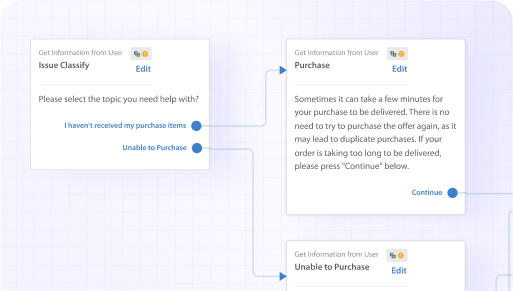
When live events or bug surges happen, automated chatbots can process thousands of repetitive ticket refunds, login issues, and reward claims without delay. Helpshift’s AI workflows triage and route each issue to the right path instantly, keeping queues light even during traffic spikes.
2. Reducing first response time to seconds
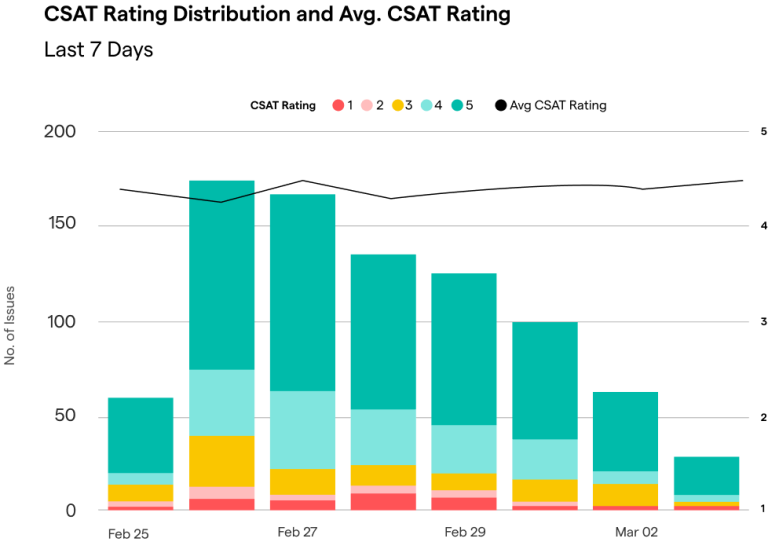
Players expect instant acknowledgment. AI chatbots greet them within seconds, often resolving common problems entirely. This speed drives satisfaction: Helpshift’s clients in gaming have seen First Response Times drop by over 80%, resulting in measurable boosts to CSAT.
3. Streamlining common workflows like IAP, login, and account recovery
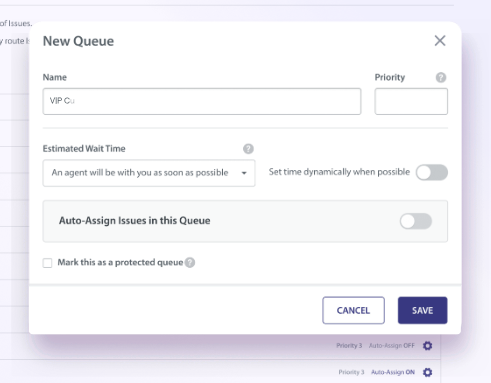
Tasks like purchase validation or password resets don’t require a human touch but they do require precision. Automated issue resolution ensures players recover accounts, claim missing items, or fix payment errors in real time. By connecting bots directly with backend systems via APIs, studios can resolve problems quickly.
4. Powering real-time in-game support
Nothing breaks immersion faster than being forced out of a game to find help. In-app messaging keeps players in the same world while they chat with bots or agents. This seamless, on-screen support transforms help into part of the play experience fast, contextual, and frustration-free.
5. Boosting global reach with multilingual AI
Language diversity is both an opportunity and a logistical challenge. Roughly 48% of player contacts across Helpshift’s clients occur in non-English languages, with some studios seeing up to 70%.
Without automation, covering that breadth would demand dozens of localized teams. Helpshift’s Language AI eliminates that barrier through automatic translation and sentiment detection, ensuring players from Seoul to São Paulo get native-level support without additional hiring.
6. Improving agent efficiency and focus
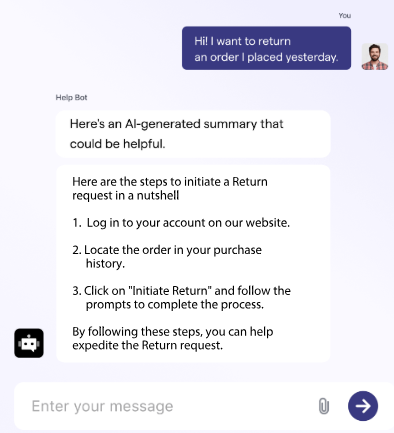
Automation clears out the repetitive noise so human agents can focus on emotionally charged or high-value issues like VIP disputes, complex gameplay bugs, or community escalations. With AI copilots summarizing issues, prioritizing queues, and suggesting responses, agents spend less time digging for context and more time resolving what truly requires their attention.
7. Turning support data into game insights
Every ticket tells a story about player behavior. Automated tagging and analytics surface trends like login drop-offs after updates or repeated payment failures helping studios fix design flaws and balance future events. This loop converts “support data” into “player insight,” feeding Live Ops with information to refine future releases.
How Leading Studios Use Automation to Scale Support
The shift to automation isn’t theoretical, it’s happening in the world’s top studios.
Jam City: Deflecting 90% of tickets and doubling CSAT
Jam City, the studio behind hits like Cookie Jam and Panda Pop, faced a growing challenge: massive player volume and limited agent bandwidth. By integrating Helpshift’s AI-driven chatbots and self-service tools, they deflected up to 90% of inbound tickets and reduced overall ticket volume by 30%.
Players could now resolve issues instantly through in-app FAQs and guided automation flows. The results were measurable. First-response times dropped by more than 80%, and CSAT scores doubled, proving that automation can deliver scale without sacrificing satisfaction.
Hutch Games: Scaling 12 million players with 4.02 CSAT
For Hutch Games, creators of Top Drives and F1 Clash, the challenge wasn’t just scale, it was consistency. With over 12 million active players, they turned to Helpshift’s automation to maintain personalized support across time zones. The studio’s workflows now deflect over 90% of issues to in-app FAQs, while the time to first response dropped to under a day. Despite the enormous player base, Hutch achieved an impressive CSAT score of 4.02.
Hothead Games: Reducing contact rates by 50% and boosting satisfaction by 80%
Hothead Games, known for Kill Shot Bravo and Rivals at War, needed a support system that could match the speed of their players. After adopting Helpshift, the studio achieved a 50% reduction in contact rate and saw response times improve by 104%.
Their automation setup also pushed customer satisfaction up by 80%, with time to first response averaging just two hours. By streamlining triage and integrating rich-media reporting directly in-app, Hothead turned what was once a reactive process into an always-on engagement engine.
Key Metrics That Prove Automation Works
Modern gaming support runs on data. These are the metrics that quantify automation’s impact:
First Response Time (FRT)
Time is the most visible metric to players. Automated acknowledgment alone can raise perceived responsiveness dramatically, cutting FRT from hours to seconds.
Ticket deflection rate
Automation resolves a significant portion of issues before they even reach an agent. Helpshift’s AI-powered Answers and Quick Search Bots help studios deflect up to 28% of tickets through intelligent self-service.
CSAT and retention scores
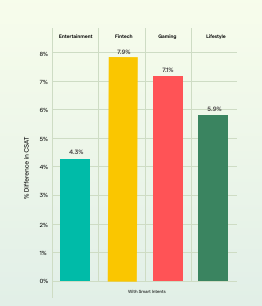
Faster resolution directly boosts satisfaction. In gaming, Smart Intents have driven a 7.1% CSAT improvement, proving that AI precision enhances player happiness.
Agent productivity
When AI collects context, suggests replies, and summarizes cases, agents resolve more tickets per hour. That efficiency translates into lower costs and a happier support team.
Final Thoughts: Automation Isn’t Optional, It’s the Advantage
In free-to-play gaming, support is an invisible layer of gameplay continuity. Every delay chips away at trust; every seamless fix deepens loyalty. The studios winning today have stopped treating automation as a side feature. They see it as their operational backbone, an always-on system that keeps Live Ops running smoothly, supports players globally, and frees humans to do what humans do best: connect.
Automation doesn’t replace empathy. It scales it. And for F2P studios building long-term engagement, that’s the real game to win. Request a Helpshift Demo to see how you can automate player support at scale without sacrificing the player experience.