




Players don’t wait to run into problems during business hours. They run into them when a clan event is live, when they finally unlock a rare skin, or when a limited-time drop is about to expire. And when something breaks in that moment, they expect support to be available instantly.
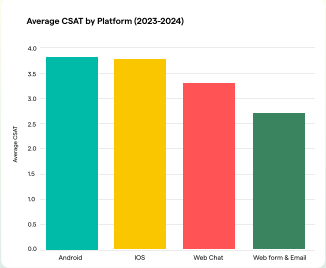
Support leaders feel this pressure every day. They watch queues spike at 3 a.m., see sentiment dip after major events, and deal with frustrated players who want answers “right now.” It’s a demanding reality, and the numbers reflect it: in-app support channels receive the highest CSAT across gaming (3.8 on average), showing players reward studios that respond in the moment.
And that’s the real tension: players live in an always-on world, but most support systems were built for scheduled hours, email queues, and region-based staffing. This article breaks down why modern gamers expect 24/7 support, what’s driving the pressure behind the scenes and how top studios deliver continuous coverage without ballooning headcount.
The 24/7 Reality of Modern Gaming
Modern games don’t pause, and neither do the people who play them. As sessions stretch across time zones and LiveOps calendars stay active around the clock, support has quietly become a 24/7 expectation built into the gaming experience itself.
Always-On Games Mean Always-On Players
Live games rarely have “quiet hours.” Battle passes roll over, guild events start, ranked ladders reset, and someone somewhere is always mid-session. When something breaks at that moment like lost progress, a failed purchase, a connection issue, players instinctively reach for help.
The problem is that legacy support setups were designed around tickets and business hours, not live sessions. Email queues, slow web forms, and disconnected portals make players feel like they’ve stepped outside the game into a waiting room.
The Global Nature of Player Bases and Time Zones
Even relatively small studios now attract worldwide audiences. That means your late-night off-hours are someone else’s prime time. If your support stack is built around a single region’s schedule, you effectively tell part of your player base to “wait until morning.”
Traditional tools magnify this problem. Separate help desks per region, manual forwarding between teams, and inconsistent translation workflows make support quality depend on where and when a player contacts you.
How LiveOps and Seasonal Events Amplify Support Needs
LiveOps teams work hard to keep the game fresh, but every new problem creates fresh support demand. Bugs cluster around launches, payment errors spike with new offers, and players flood in with questions about new systems.
Without robust automation and in-game support, these spikes crush legacy queues. The result: backlogs, stressed agents, and event sentiment dragged down by issues that could have been predicted and triaged in advance.
Why 24/7 Support Is No Longer Optional
Support has become part of the promise you make when you launch a live game. Players expect that if they invest time, money, and emotion in your world, the studio will be there when something goes wrong.
In this section, we’ll zoom in on how player expectations shifted and why delayed responses directly affect retention:
Player Expectations Have Shifted with Real-Time Gameplay
Real-time matchmaking, synchronous co-op, and timed events create situations where issues can’t wait. A failed match when climbing ranked, a missing reward during a limited event, or a broken daily task all create immediate friction.
Players aren’t benchmarking you against “other support desks.” They compare their support experience to the speed of their game client: quick, responsive, and contextual.
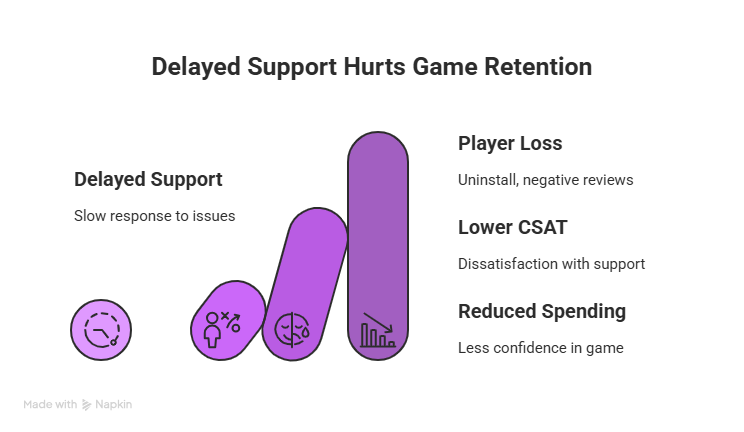
Delayed Responses = Lost Players and Lower CSAT
Slow responses inevitably feel like abandonment. Players might tolerate one slow resolution, but repeated delays push them to uninstall, leave a negative review, or move to a competitor that feels more responsive.
This is especially painful when the issues are preventable or repetitive, but your tools don’t surface the patterns quickly enough to address them.
The Competitive Edge of Always-Available Support
Studios that respond quickly, in-game, and in context earn more than high CSAT scores. They signal that the player’s time and investment matter. That confidence makes players more comfortable spending, returning after breaks, and recommending the game to friends.
Always-available support is a trust-building asset.
The Challenges of Maintaining Round-the-Clock Coverage
If you tried to solve 24/7 expectations purely by adding people, costs would spike and quality would still fluctuate. Many studios feel this gap daily: they know what players expect, but their stack was built for a different era.
This section outlines the real obstacles standing between you and reliable, always-on support.
Time Zone Coverage and Staffing Costs
Covering all time zones with human agents means complex shift planning, overtime, and region-specific staffing. Legacy systems built around email and generic ticketing aren’t designed for dynamic load-balancing, so issues pile up in whichever queue is understaffed.
Even when budgets allow you to hire, you’re still channeling players through tools that weren’t designed for live service environments.
Burnout and Operational Inefficiencies in Manual Models
When every new ticket lands on an agent’s lap, the team spends most of its time answering the same Tier-1 questions: login issues, basic troubleshooting, “where is my purchase,” and similar threads.
This manual triage model drains people and slows down complex resolutions. Support leads know they should be automating workflows, but older systems often require heavy engineering work or third-party scripts for even basic automation.
Maintaining Consistency Across Regional Teams
As you expand, you end up layering tools: one system for email, another for in-game forms, separate translation tools, separate dashboards per region. Each team builds its own macros, its own tone, and its own workflows.
Players feel that fragmentation. Experiences vary wildly depending on language or platform, and support leadership lacks a unified view of what’s happening globally.
How Leading Studios Deliver 24/7 Support Without Expanding Teams
The studios that get 24/7 right start by redesigning their support journey. They:
- Automate predictable, repetitive issues.
- Bring support inside the game client.
- Route complex cases with intent-based logic, not manual triage.
- Use language technology to serve global audiences from a unified setup.
Only then do they look for platforms that can operationalize this design. Helpshift is one such platform, built specifically around these principles, so you don’t have to assemble everything yourself.
AI-Powered Chatbots That Handle Common Issues Instantly

First, map out your Tier-1 issues: password resets, stuck progress, missing rewards, purchase verification, basic troubleshooting. Build flows that:
- Ask the right clarifying questions.
- Pull the correct article or action based on intent.
- Hand off to an agent only when needed.
Done manually, that means scripting bot flows, building integrations, and wiring up decision trees. Helpshift streamlines this with AI chatbots and Smart Intents that detect what a player needs for about 95% of issues, then route or resolve accordingly.
You still design the journey, but the platform handles the heavy lifting: classification, execution, and asynchronous follow-up.
In-App Messaging for Seamless Player Help Anytime, Anywhere
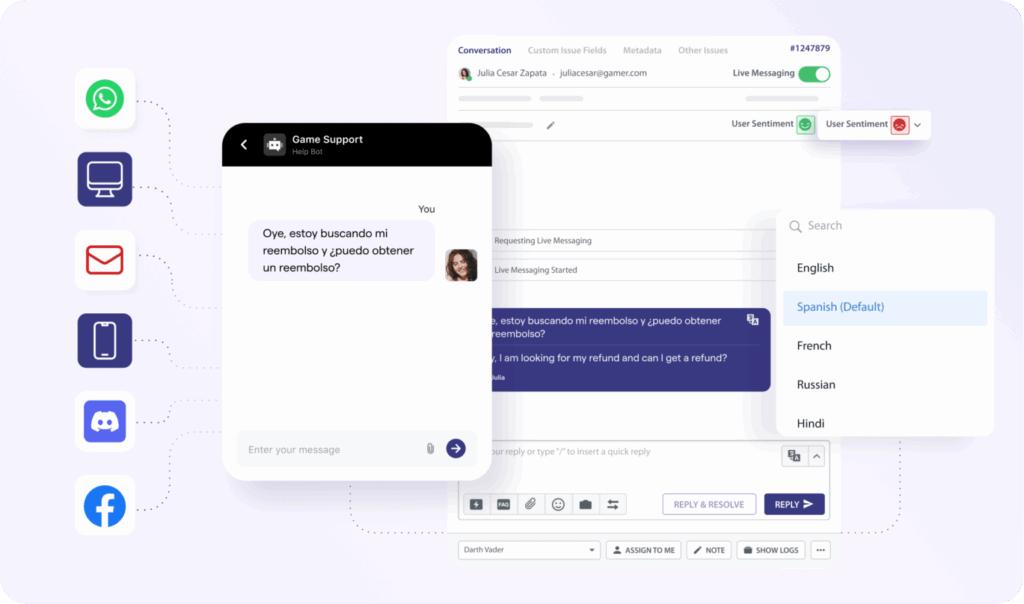
As a principle, support should live where the player already is. If you’re designing your own stack, that means building or embedding a messaging layer directly into your game, preserving session context and device information.
In practice, that’s a substantial engineering effort especially if you also want threaded conversations, attachments, and multi-device continuity.
Helpshift provides native in-app messaging built for games, so players can contact support without leaving the client. This keeps context intact for both player and agent, and aligns with what the Benchmark Report shows: in-app messaging consistently outperforms email and web forms on CSAT.
Smart Ticket Routing for Faster Escalation of Complex Issues
Once your automation handles the basics, the remaining work is all about routing complexity. A strong internal design uses:
- Clear intent categories.
- Priority tiers based on severity, player segment, or live event impact.
- Auto-assignment rules that send issues to the right queues early.
You can build this with internal rules engines, but maintaining them across products and regions gets messy.
Helpshift’s Smart Intents and routing engine apply your resolution logic consistently, so tickets move toward the right specialist without manual triage. That reduces bottlenecks where tickets sit unassigned or bounce between teams.
Multilingual AI Support for Global Players
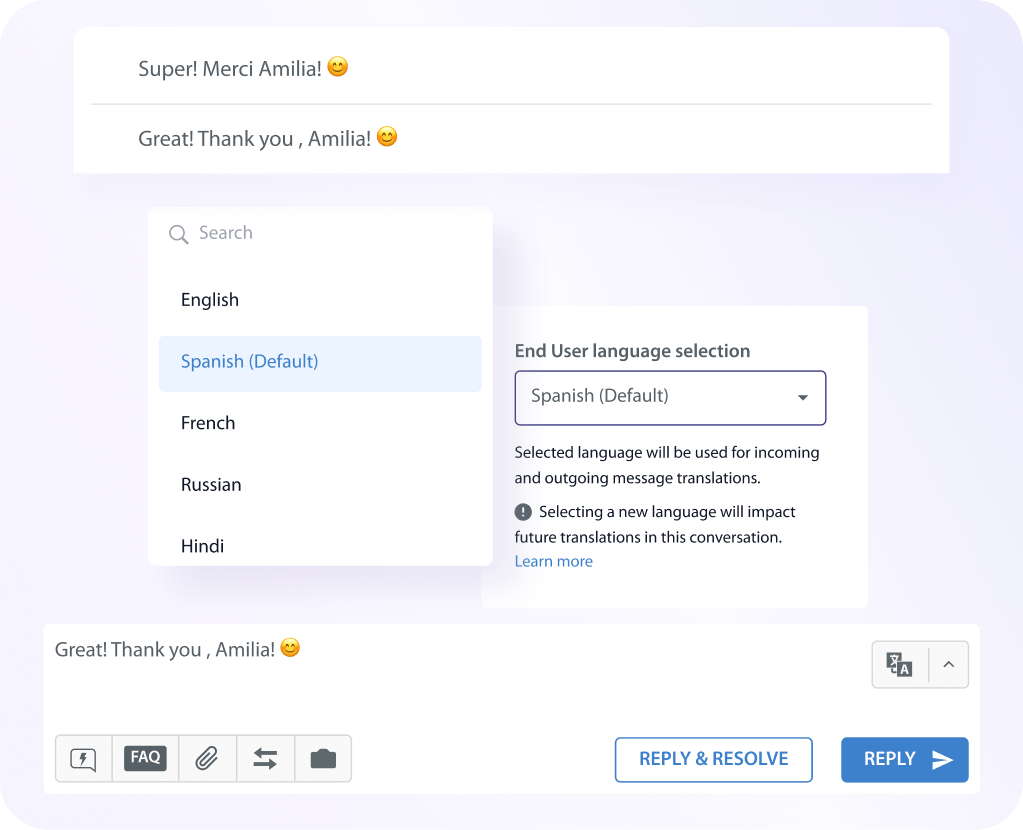
Supporting global audiences manually typically means:
- Separate regional queues.
- Hiring language-specific agents for each time zone.
- Using external translation tools that break context and slow things down.
A modern approach uses language detection and translation as part of the support workflow itself. Language AI dramatically improves response times by eliminating the wait for a language-matched agent, especially in gaming where players span many regions.
Helpshift’s Language AI builds this into the platform, letting your team respond in dozens of languages from the same workspace while preserving tone, context, and SLAs.
Case Studies: 24/7 Support in Action
It’s easier to see the shift from legacy systems to modern support when you look at real studios. Each of these teams started with familiar problems like manual queues, regional fragmentation, strained agents and rebuilt their support around automation and in-game experiences, then used Helpshift to scale that design.
Rovio: Managing global player requests at scale
Rovio, the studio behind Angry Birds and many other titles, needed to unify support across 23 games and a global player base. Their earlier setup relied on more traditional tools and fragmented workflows, which struggled under the volume and variety of requests. By centralizing operations and adopting a modern, automation-led model with Helpshift, Rovio achieved 91% FAQ deflection, improved CSAT by 26.5%, and realized roughly $1.7M in annual savings.
That combination of automation and in-app support allowed them to provide round-the-clock help without multiplying headcount.
Trailmix: Using AI to maintain fast, real-time responses
Trailmix, the studio behind Love & Pies, started with support that wasn’t built for scale: manual processes, limited automation, and growing pressure from a fast-expanding player base.
By redesigning their journey around automation, then implementing Helpshift’s AI workflows and Language AI, Trailmix reached a 93% automation rate, achieved about 79% FAQ deflection, cut human time to first response by 32.3%, and reduced time to resolve by 26.5%. Player satisfaction followed, with CSAT stabilizing around 4.3–4.4 across channels.
Kixeye: Delivering always-on support without expanding headcount
Kixeye migrated away from a legacy Zendesk-based setup that depended heavily on manual triage. Within about 12 weeks, they moved to a Helpshift-powered stack focused on automation, intent-based routing, and in-app experiences.
In under six months, Kixeye achieved a 93% FAQ deflection rate and saved over $100,000 in support costs, while also cutting Time to First Human Response by 76.8%. This gave them true 24/7 coverage without building a massive, around-the-clock human team.
Best Practices to Build 24/7 Support That Scales
If you’re currently wrestling with legacy systems, the path forward doesn’t have to start with a rip-and-replace. You can gradually shift your model using these principles, then decide how much to build in-house versus adopting a platform like Helpshift.
Automate Tier-1 Issues Before You Hire More Agents
Start by listing your top 10–20 repetitive issues and designing flows that resolve them with structured questions and clear outcomes. Even a simple rules-based bot can dramatically reduce load if it’s fed with good intent categories and knowledge content.
Helpshift then takes this further with AI-powered workflows and automation across those intents, but the underlying design remains yours.
Integrate In-Game Support Channels
If support still lives in email and web forms, prioritize bringing it into your game client. Even a basic embedded form with context capture is better than sending players to a browser tab. Over time, you can evolve this into a full messaging experience.
Helpshift’s in-app messaging gives you that full experience out of the box, aligned with the patterns players already prefer.
Use Analytics to Identify Peak Hours and Optimize Workflows
Pull data on when spikes happen, which issues dominate at different times, and where queues stall. This informs:
- Which flows to automate next.
- How to tune your routing rules.
- Where you truly need human coverage versus asynchronous support.
Helpshift’s analytics layer consolidates this across channels, but the habit of data-driven iteration works even if you’re still piecing together reports from multiple tools.
Keep Human Agents Focused on High-Value, Complex Cases
Design your stack so that humans handle the conversations that matter most: VIP issues, complex technical bugs, sensitive account problems, and high-frustration scenarios. Let automation gather context, handle simple resolutions, and escalate thoughtfully.
Helpshift’s Smart Intents, routing, and Language AI help enforce this model reliably, so agents aren’t pulled back into repetitive Tier-1 work every time volumes spike.
Final Thoughts: Always-On Games Need Always-On Support
Always-on games demand support that is just as steady, scalable, and global as the experiences you ship. The studios that thrive are the ones that redesign their support journeys around automation, in-game channels, and intelligent routing, then use platforms like Helpshift to operationalize that design at scale.If you’re ready to move beyond legacy ticket queues and build 24/7 support that matches the ambition of your game, request a Helpshift demo and see how AI-powered, in-app support can become a core part of your player experience.