



When a loyal player encounters a login failure, payment glitch, or vanished progress during a limited-time event, they don’t wait patiently. They restart the app, scroll through Discord threads, try community-shared “fixes,” and eventually open support already frustrated.
A study found that nearly 9 in 10 players would contact support more often if it were easier to access, and a significant portion admitted to abandoning a game entirely when support felt inaccessible or slow.
Silent churn is what hurts most. The players disappearing quietly are often the ones who once showed up for events, completed battle passes, persuaded friends to join, or spent consistently. This article breaks down the real cost of poor support, how to recognize when systems are failing your community, and how modern in-game automation and AI can help studios protect retention and operational efficiency.
Why Player Support Is the Foundation of Retention
Support expectations in gaming have shifted. Modern players want help to feel intuitive and integrated. They’re used to responsive digital services elsewhere, and they bring those expectations with them, here’s how:
Modern players expect more than just fast responses
Speed matters, but accessibility matters more. A support workflow that forces someone to leave the game, repeat information, or wait without context feels outdated. In-game messaging, automated troubleshooting, and guided flows meet players where they already are i.e. inside the experience.
How support shapes player trust and long-term loyalty
Trust is built when resolutions feel consistent and communication feels human even when handled by automation. A helpful interaction reassures players that the studio is attentive and responsive. Over time, this translates into a willingness to spend, participate in events, and remain part of the community.
Why ignoring support issues impacts the entire game ecosystem
Support is a reflection of operational health. Unresolved patterns often reveal UX friction, backend instability, or monetization blockers. When teams rely on legacy systems like email inboxes, manual triage, disconnected knowledge bases support becomes reactive instead of insight-driven.
Over time, the impact spreads: lower CSAT, negative store reviews, rising churn, overwhelmed agents, and preventable damage to brand perception.
The True Cost of Poor Player Support
The financial impact isn’t always immediate, but it compounds.
Lost revenue from frustrated, high-spending players
High-value players are often among the first to feel pain during outages or updates. When support becomes a bottleneck, these players disengage from in-app purchases, seasonal passes, or event-linked monetization.
Negative reviews and ratings that hurt acquisition
Players express support issues publicly like in app stores, Reddit threads, Discord servers, and TikTok comments. These reviews linger, shaping first impressions for new players and influencing acquisition efficiency.
Increased churn and lower player lifetime value (LTV)
Churn rarely happens because of one bad experience. It happens when friction stacks without acknowledgment or resolution. Poor support is one of the leading reasons players consider uninstalling.
Burnout among overwhelmed support agents
When repetitive queries flood the queue and manual processes slow turnaround times, agents feel the strain. Burnout and turnover rise, and institutional knowledge disappears, making the cycle even harder to break.
Signs Your Support System Is Falling Behind
Recognizing early signals helps prevent long-term damage. Here are some of the signals to look out for:
Slow response times during events or updates
LiveOps spikes are predictable, yet they overwhelm teams relying on manual workflows. When ticket queues climb during launches or events, it’s often a sign your system lacks scalable automation.
Repetitive tickets without resolution
When players repeatedly ask the same questions, it suggests weak self-service, limited in-app guidance, or missing automation flows. These patterns often reveal underlying game friction or unclear UI paths.
Poor communication channels (e.g., email-only support)
Requiring players to leave the game to seek help creates unnecessary friction. It interrupts engagement and increases abandonment mid-ticket.
Lack of visibility into player issues for product teams
Support is a rich feedback stream. When insights don’t travel beyond the inbox, recurring issues remain unresolved, and improvements rely on assumptions. Helpshift’s reporting tools close this gap by surfacing patterns and linking them to support and gameplay behavior.
How AI-Driven Support Prevents Player Loss
Before adding AI, many teams see improvements just by simplifying workflows and clarifying where players go for help. Once that foundation is set, automation enhances efficiency, scale, and player experience.
Real-time, in-game assistance for instant problem solving
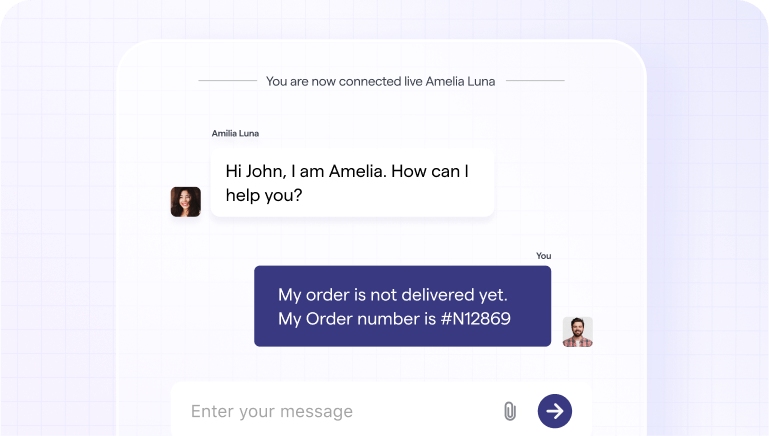
Support still lives outside the game in many studios, forcing players to switch platforms or wait in inboxes. Even before introducing new tech, teams can improve the experience by adding clearer entry points to help, linking FAQs to high-friction screens, and standardizing responses.
Once core pathways are simplified, in-game messaging becomes the next logical step. Helpshift enables two-way support directly inside the game and automatically captures device and account context, so players don’t repeat information and agents don’t guess. The result: fewer drop-offs and faster resolutions during the moments that matter.
Automation that deflects Tier-1 tickets efficiently
Repetitive tickets like missing items, login problems, reward delays consume agent time. Teams can reduce this manually by organizing top recurring issues, updating help articles, and training agents on consistent replies.
Automation builds on this work. The Helpshift Digital Benchmark Report shows that automation resolves up to 85% of support volume, with 58% of issues fully solved without an agent. Instead of just sending links, Helpshift’s automated flows connect to backend systems, check purchase or reward status, and resolve the issue end-to-end when possible.
Smart routing to prioritize VIP and urgent cases
Traditional queues treat every ticket equally, which slows down high-impact cases. Studios can improve with basic tagging, priority tiers, and internal SLAs.
AI routing refines this at scale. Helpshift’s Smart Intents categorize the issue and route by urgency or player status, so VIP tickets, payment problems, or event blockers are handled first.
Sentiment analysis and multilingual support
It’s difficult to identify which frustrated players are ready to churn until a ticket is opened. Basic keyword filters help, but they’re inconsistent. Sentiment analysis adds context by scoring urgency and tone so escalation can happen earlier.
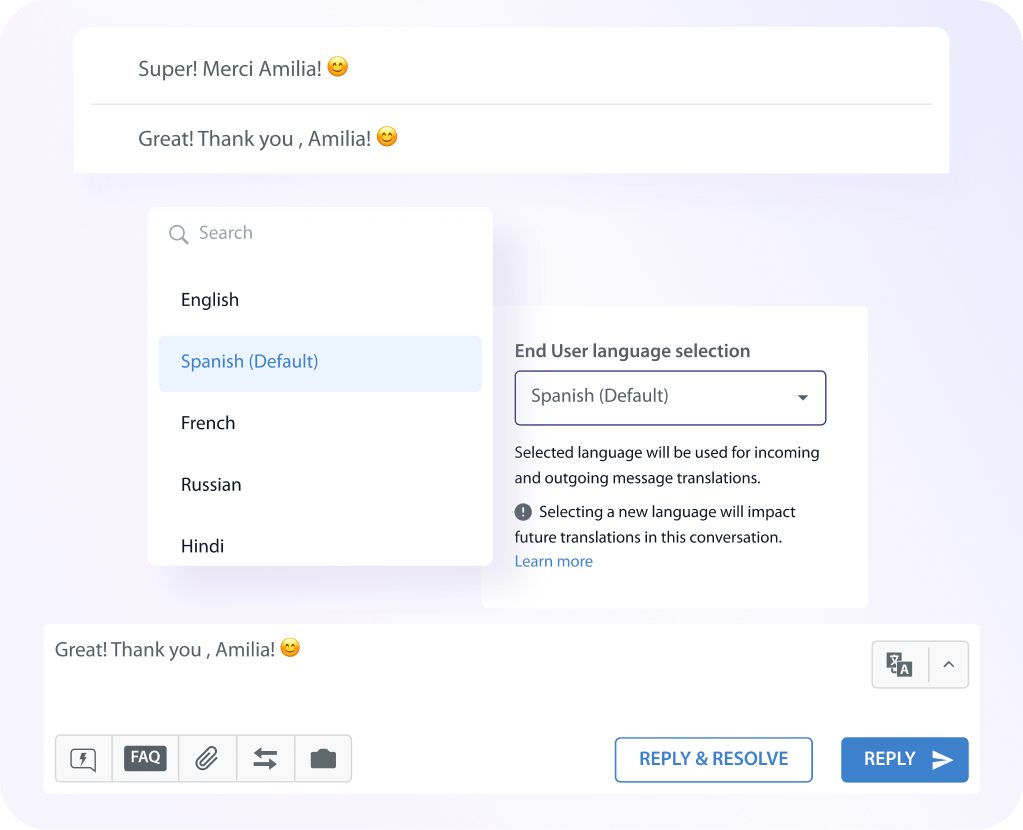
Language is another bottleneck. Localizing articles and assigning bilingual agents helps temporarily, but it doesn’t scale. Helpshift’s Language AI detects the player’s language and translates conversations in real time, keeping global support personal without hiring separate regional teams.
Case Studies: Turning Support into a Competitive Advantage
Rovio: Consistency across 23 global titles
When Rovio expanded its catalog, support became fragmented across multiple channels and tools. Players were getting different experiences depending on the title, and the team struggled to maintain consistent quality without scaling headcount.
After consolidating support in-game and automating common flows, Rovio achieved a 91% deflection rate, lifted CSAT from 3.4 to 4.3, and scaled support across 23 games without expanding the team at the pace growth would have normally required. The change created a unified experience where support finally felt like part of the game, not a separate system.
Trailmix: Maintaining quality through unpredictable volume
Trailmix built its support strategy around immersion and tone, but volume spikes especially during content updates strained their small team. Before automation, time-sensitive tickets risked sitting behind routine questions.
With automated workflows handling repetitive issues, Trailmix now resolves 93% of incoming tickets automatically, maintains a 4.3 CSAT, and protects bandwidth for conversations where human judgment matters.
Kixeye: Faster responses with fewer manual steps
Kixeye’s legacy support tools slowed down escalations, especially for real-time multiplayer titles where delays affect gameplay outcomes. The team needed workflows that moved as quickly as the users they served.
After switching to automated routing and in-game messaging, Time to First Human Response dropped by 76.8%, automation reached 85%, and CSAT climbed from 3.2 to 4.48. The support experience went from reactive inbox management to proactive care that matched the pace of the game.
Quantifying the ROI of Modern Player Support
Better support shows up in metrics beyond CSAT like retention curves strengthen, reviews stabilize, and event conversion improves. Automation reduces operational overhead and keeps staffing scalable instead of reactive. Support insights also drive product changes by revealing friction patterns that impact design, monetization, and LiveOps.
Helpshift’s analytics make these signals visible across teams rather than siloed inside support, helping studios make informed decisions grounded in real player behavior.
Final Thoughts: Don’t Let Poor Support Undo Great Gameplay
Support should protect the experience you worked hard to build. If your current workflow feels fragmented or difficult for players to navigate, incremental improvements like clarifying access points, reducing manual triage, and increasing visibility can help. Once those foundations are in place, platforms like Helpshift provide automation, in-game workflows, Language AI, and sentiment-aware routing to scale support without sa crificing empathy or speed.Players stay where they feel heard. If your team is ready to build support that keeps pace with your game, request a Helpshift demo and explore what modern in-game support can look like.