The seven strategies cover in-game support, value-based segmentation, response quality, multilingual fluency, gaming-trained AI, agent empowerment and transparency
Real conversations from Melsoft and Vizor Games show the human judgment that separates good agents from great ones
Studios that get all seven running turn customer service into one of the highest-leverage retention investments they make
Player support stopped being a back-office function years ago. The studios pulling ahead in 2026 treat customer service as a retention lever, a brand expression, and a live ops dependency, all at once.
Most “gaming customer service” advice still gets recycled from generic CX playbooks. It misses what makes gaming support structurally different: real-time gameplay where every second matters, in-game intents that generalist tools cannot resolve, and live ops cycles that flat-staffed teams cannot absorb.
This guide covers eight strategies for gaming customer service built specifically for gaming studios, with named-studio outcomes and real player conversations. The strategies are not a menu. They are a system. Studios that get all eight running see compound effects: lower cost per resolution, higher CSAT, and meaningful player LTV growth.
1. Embed support inside the game so players never break their session
Every time a player exits the game to find help, the session ends. Native in-game support keeps players inside the experience while their issue gets resolved. This is the single highest-leverage strategy in gaming customer support, and it is the one that most generalist platforms cannot deliver. Halfbrick, the studio behind Fruit Ninja and Jetpack Joyride, deployed Helpshift to capture player feedback during development and to handle support spikes when player demand surged. The mechanism is structural: when support lives inside the game, deflection rates climb, response times fall, and the player never has to break the session to get help. Helpshift’s native in-game SDK runs across iOS, Android, Unity, Unreal, web, PC, and console, so the same support layer works whether the player is on mobile during a commute or on console at home.
2. Segment players by value before you architect the queue
Treating every player like the same player is a retention error that compounds quickly. The top 5% of players generate the majority of revenue in most games. They expect to be recognized when they reach support. Generic ticketing platforms route everyone into the same queue. Gaming-native platforms architect the queue around player value.
The first step is defining who counts as a VIP and using the same definition across game development, marketing, and support. As player support leader Tony Won notes, “you can’t appropriately support VIP players if you’re not using the same ways of identifying them across all of your different systems and data within the company.”
Once segmentation is locked in, route accordingly. VIPs get dedicated queues with white-glove human escalation. New players get contextual onboarding help. Returning lapsed players get retention-grade attention. Casual players get strong self-service. The cost-to-serve mapping flips from flat to tiered, and the CSAT mapping flips from average to optimized for the players who matter most.
3. Empower agents to go off-script when the moment calls
In the interaction below, the player asks for assistance to distribute accumulated wealth to fellow players, a rather generous and thoughtful request. Melsoft starts off the interaction by recognizing the player’s accomplishments (“Congratulations on your town’s birthday!”), which sets a friendly tone and makes the player feel comfortable and valued.
Player: Hi! I’m leader of the town KoffeKupz, the birthday of my town is coming up soon, so i would like to make a present for every member. I m gonna buy 15 pink gifts, could you move them to the treasure trove of our town??? Waiting for your response
Melsoft: Congratulations on your town’s Birthday!
Thank you for playing with us for one year, we will do our best to bring you more positive memories with our future updates.
Usually we don’t intervene in the game process, but on such an occasion we can make an exception. 🙂 Please get back to us when you will have the gifts, and we will make adjustments to your treasure trove so you could congratulate your team members.
Best regards, Melsoft Games support team
P: wow, thank you very much guys!! i’ve already bought gifts, just let me know when you’re done!
M: We have added gifts to your treasure trove, now you will be able to congratulate your team members when the time comes. Good luck in the coffee business! 🙂
Per company policy, the support team usually stays out of the process of prize distribution to remain impartial. However, the team recognizes that this is a low cost, high reward instance. It is low cost because credibility isn’t much at risk, and high reward in that fulfilling the player’s request has the potential to positively impact more than just the player, but the entire clan as well. The support team chose to seize this unique opportunity to delight a large group of valuable players because the benefits outweighed the costs.
The agent’s creative ability to assess the player’s particular situation holistically and tailor a solution illustrates a well-attuned skill to go off-script. This is incredibly valuable because it requires not only good judgment, but a level of thoughtfulness that grows with experience.
Vizor Games
Vizor Games is the developer of online farming game: Zombie Island. Zombie Island is set in a fantasy world of friendly zombies and combines elements of town building, adventure, and trade.
4. Always Provide Easily Digestible Information
A pitfall for many companies is sending out lengthy FAQs instead of breaking down the solution and only providing the relevant nugget in the message. This forces the player to do more work to solve an issue thereby adding to the player’s frustration. It’s important to remember that players who are contacting support are invested enough to give the game another chance (which is often not the case). So make it as easy and convenient as possible for them to continue playing.
Player: on the harvest Island, I got locked up and couldn’t finish the last two quests, I had to use z bucks to finish.. it is locked in a way I can get into the other side of the island. there is no way to get there, I have got rid of everything around it and it wont let me in.
Vizor: Thanks for contacting us! We have received your message and will get back to you as soon as we can.
P: Thank you so much for your help in this matter!
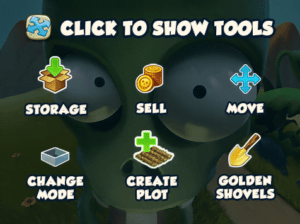
V: Hello! Not to worry. Changing Mode might do the trick. Please, tap the icon with blue arrows in the lower right corner and tap the grey box in the pop-up menu on the bottom side of the screen. This will make the bigger objects invisible for you and you will see what you need to remove to unblock a new area. Then you can switch the Mode back. If the problem persists, please send us a message with a screenshot with Mode turned on.
P: thank you that worked! I had tried everything for two days and couldn’t get it found to go forward.. I think I am going to run out of time now before i CAN GET IT all done ..
V: Next time you have the issue, feel free to contact us right away, so we could provide the assistance ASAP. Don’t worry about completing the timed islands completely, they don’t influence the main storyline, they will appear more in the future. Have a great time in the game 🙂
P: ★★★★★ CSAT Rating
What makes this interaction great is that the agent presented the information in an instructive, digestible format without sounding overly scripted. This creates the familiar, conversational tone that players appreciate, and also helps build trust between the organization and its players.
5. Build trust through transparency, even when you have to say no
Building on the concept of going off-script: it is equally important to know what boundaries to hold. Being open, honest, and transparent with players is necessary to build the trust required for a long-term relationship. In the Melsoft conversation above, the agent specifically called out that fulfilling the request was outside normal protocol:
Melsoft: Usually we don’t intervene in the game process, but on such an occasion we can make an exception.
Setting that boundary early avoided future complications because the player would not expect the support team to bypass rules every time. The transparency made the exception feel like a real gift rather than a precedent. The result was a five-star rating and a player who would recommend the game to their inner circle, the type of word-of-mouth that converts more reliably than any marketing channel.
The lesson scales beyond the off-script moment. Transparency works the same way when the answer is no. A player who understands why a decision was made, even when they disagree with it, is more likely to stay than one who feels the rules are arbitrary. Honesty, in support as everywhere else, compounds.
6. Use AI trained on gaming intents, not generalist NLU
This is the strategy that separates gaming-native platforms from CRM tools with AI bolted on. Generic AI agents trained on enterprise SaaS support data struggle with gaming-specific intents. They route them to humans by default, which inflates cost per resolution without improving accuracy. Care AI automates over 70% of player interactions using NLU trained on more than 14 years of gaming-specific data. The model understands the difference between a refund request that needs verification, a ban appeal that needs policy review, and a missing-reward issue that can be auto-resolved. Quick Search bot resolves another layer of basic queries before they ever reach a human. The composite effect is the difference between an AI that helps and an AI that just routes.
7. Speak the Player’s Language [Literally and Otherwise]
Support teams should prioritize “speaking the player’s language” and communicate with the player in a way that he or she will best understand. This includes designing an inclusive support experience that accommodates different communication styles.
In this interaction, the agent attached a screenshot within the message (pictured below) so that the player could have a visual of what the agent was referring to.
This is especially important for players who prefer visuals over written instructions, and also for players who are communicating in a non-native language.
Keeping it Real
The common thread between these two exemplary mobile gaming companies is treating players with the same level of patience, authenticity, and understanding as one would treat a friend. We are all familiar with companies that do not treat their customers like actual people, which becomes particularly evident when they contact customer service. At the end of the day, it’s important first and foremost to treat issues like actual conversations.
Great customer service responses in mobile gaming require speed, personalization, and the right technology. Helpshift is an AI-native player engagement platform that empowers studios to deliver fast, empathetic support directly within the game — turning every service interaction into stronger player loyalty and higher lifetime value.
Frequently Asked Questions
What makes gaming customer service different from other industries?
Gaming customer service is shaped by three structural factors other industries do not share at the same intensity. Real-time gameplay shrinks the response time window to minutes or seconds. In-game intents (refunds, ban appeals, currency disputes, missing rewards) need gaming-specific knowledge that generalist tools mishandle. Live ops cycles create traffic spikes that flat-staffed support teams cannot absorb. Generic CX playbooks miss all three.
What are the most important metrics for gaming customer service?
CSAT by player tier, deflection rate by intent, time to resolution by tier (self-service vs. AI agent vs. human), cost per resolved interaction, and player LTV uplift attributable to support touchpoints. Tracking only CSAT is the most common mistake because it measures satisfaction in the moment rather than retention impact over time.
How do gaming studios handle multilingual customer service at scale?
The strongest approach combines AI-driven translation with cultural fluency. Translation alone misses tone, regional nuance, and gaming-specific vocabulary. Helpshift’s Language AI handles 70+ languages with cultural adaptation across support conversations, FAQs, and in-app messaging, so studios can serve global player bases without standing up regional teams in every market.
How does AI improve gaming customer service without losing the human touch?
AI improves gaming customer service when it handles routine, high-volume queries autonomously and frees human agents for the conversations where empathy and judgment matter most. The Melsoft and Vizor examples in this post are exactly the moments where human agents add value that AI cannot replace. The strongest gaming CX programs use AI to absorb the routine work so humans can deliver the moments that earn five-star ratings.
Ask anyone shortlisting autonomous customer service agents in 2026 to name the two startups everyone is talking about, and you will hear the same pair: