



Players don’t churn only because of weak gameplay. They churn because they feel unheard, ignored, or pushed past their breaking point. A payment glitch, an unbalanced event, or a long wait for support can tip even your most loyal players into frustration and frustration spreads fast in the gaming community. Angry Reddit threads, one-star reviews, and negative word of mouth are symptoms of deeper psychological triggers.
According to Helpshift’s Digital Support Benchmark Report, manual resolutions in gaming take an average of 84 hours to close, while automation brings that down to just 9 hours. That gap shows how quickly frustration can escalate when players feel left waiting.
The truth is, frustration will always exist in gaming. But the way your support team interprets and responds to it determines whether it leads to churn or long-term loyalty. In this blog, we’ll explore the psychology of player frustration, how support data uncovers hidden emotions, and what leaders can do to turn frustration into opportunities for retention and growth.
Understanding the Psychology of Player Frustration
Every player expects a challenge, but when it turns into unnecessary obstacles, that challenge backfires. Let’s break down what makes frustration such a powerful driver of churn:
Why frustration is a natural part of gaming
Games are designed to test limits. Difficulty spikes, puzzles, or boss fights create moments of tension that, when overcome, deliver satisfaction. That balance between challenge and achievement is what keeps players engaged. Without some level of frustration, the sense of accomplishment disappears.
When healthy challenge turns into negative frustration
The shift happens when players feel stuck without agency. If they lose progress due to a crash, face unfair matchmaking, or struggle with repetitive errors, the frustration feels imposed, not earned. Instead of motivating them to try harder, it creates resentment.
How frustration impacts retention, spending, and ratings
According to the Helpshift Digital Support Benchmark Report, manual ticket resolutions in gaming take an average of 84 hours to close, while automated workflows bring this down to just 9 hours. When players wait days for answers, frustration grows into distrust. And once that trust is broken, spending and retention quickly decline.
The Role of Support Data in Uncovering Player Emotions
Frustration isn’t always visible on the surface. Players might rage-quit quietly or complain in community forums long before they contact support. This is where your support data becomes invaluable.
Support tickets as a window into player pain points
Every ticket is a snapshot of emotion. Complaints about bugs, purchase failures, or delays are more than functional issues, they’re emotional signals. High-volume, repetitive tickets often highlight pain points that designers and product teams can’t ignore.
Sentiment analysis to detect early signs of churn
By applying sentiment analysis to ticket language and in-game messages, teams can identify rising anger before it boils over. Helpshift’s reporting shows that partial automation consistently drives higher CSAT scores than manual support in gaming, because players experience faster acknowledgement and smoother interactions
Identifying patterns across issues and player segments
Not all frustration is equal. A casual player might tolerate a bug, but for VIP spenders, the same bug could be the last straw. Grouping support data by player segment highlights which frustrations truly threaten revenue, giving teams the insight to prioritize fixes.
Common Triggers of Player Frustration Revealed by Support Data
Support data consistently exposes recurring themes that fuel negative emotions. Here are the most common triggers:
Technical issues: bugs, crashes, and connectivity
Nothing derails immersion faster than instability. Frequent crashes or lag during peak events create lasting frustration that no reward can make up for.
Account and purchase problems that break trust
Account lockouts or failed transactions strike at the core of player trust. If players feel their money or time isn’t respected, they would leave and even talk about their complaints publicly.
Poor event design or unbalanced gameplay
Support tickets often spike after poorly tuned events or unfair matchmaking. These aren’t “bugs” in the technical sense, but they’re just as damaging to player satisfaction.
Slow or unhelpful customer support interactions
Speed matters. According to the Helpshift Buyers Guide, slow response times are one of the top drivers of customer frustration, often leading directly to churn.
Turning Frustration Into Retention Opportunities
Frustration can’t be eliminated, but it can be diffused, redirected, and even transformed into loyalty if handled the right way.
Fast first response as an emotional diffuser
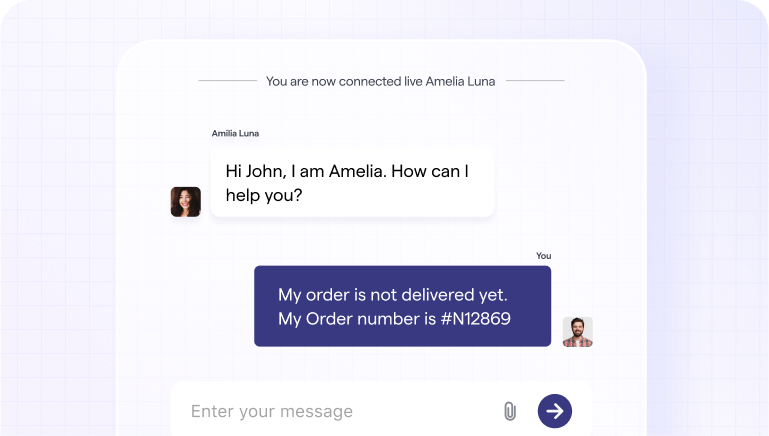
Even if the issue takes time to resolve, a quick acknowledgement reduces tension. Players want to know they’ve been heard. Helpshift’s in-app messaging ensures this happens instantly, without breaking immersion.
AI Bots That Resolve Simple Issues Before Anger Builds

Routine issues like password resets or purchase confirmations don’t need human intervention. Helpshift’s AI and Automation chatbots resolve these instantly, giving players the reassurance they crave while freeing agents for complex cases.
Escalating VIP and high-value cases to human agents quickly
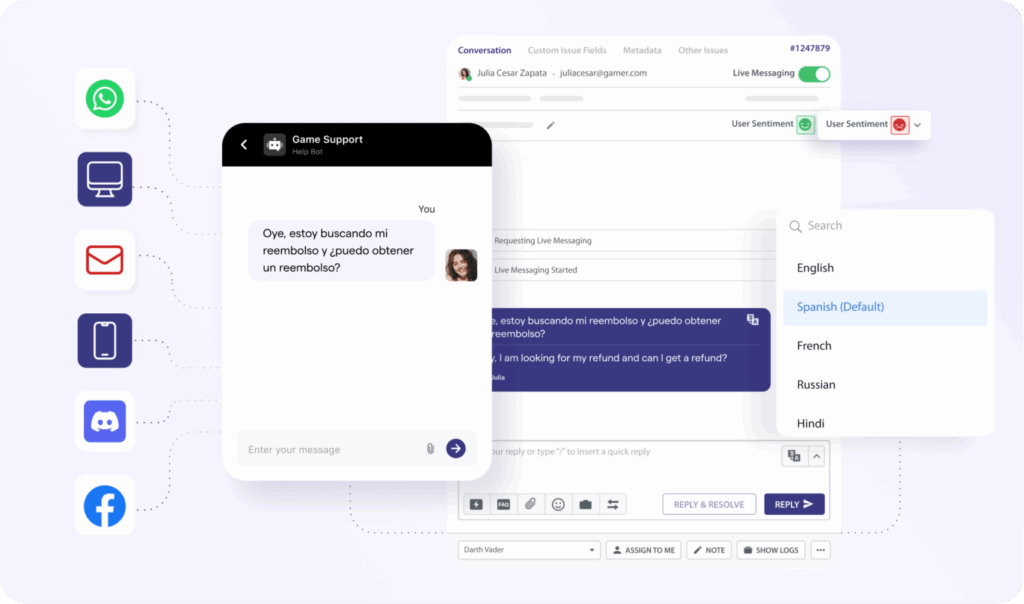
VIP players expect personalized attention. Escalating their tickets directly to skilled human agents through the Agent Workspace prevents churn and shows respect for their time and spending.
Closing the feedback loop with players
Following up after resolution whether through in-game surveys or personalized messages—signals that player voices matter. Helpshift’s Help Center makes this process seamless and timely.
Case Studies: Support Data Driving Game Improvements
Support data isn’t just for resolving tickets; it’s a lens into player psychology that drives real product decisions.
Rovio: Scaling across 23 games with automation
When Rovio moved to Helpshift, they deployed AI & automation across 23 titles in less than 8 months, reaching a 91% deflection rate and boosting CSAT by 26.5% to 4.3. They also achieved $1.7M in savings and cut translation-related costs by 60%.
By routing 93% of issues through in-game messaging and leveraging Smart Intents plus Custom Bots, they drastically reduced ticket volumes and freed their agents to focus on harder problems.
Sybo: Subway Surfers hits high deflection and response gains
SYBO achieved 77% automation, 95% deflection, and a CSAT of 4.3 in under three months after adopting Helpshift. They also improved agent productivity by 80% and reduced “time to first reply” by 86% to about 1h40m.
Because many players submitted through messaging channels (SDK) and support routing was optimized with bots and smart intents, their team handled increased traffic without hiring more agents.
Kixeye: Rapid migration, big gains
Kixeye’s shift from Zendesk to Helpshift took just 12 weeks, and within six months they saw a 40% lift in CSAT, 76.8% reduction in time to first human reply, and over $100K in cost savings.
They also hit 85% automation and 93% FAQ deflection, using Helpshift’s Custom Bots, Language AI, and agent co-pilot capabilities to support scaling without proportionally scaling headcount.
Best Practices for Leveraging Support Data
- Combine CSAT with behavioral telemetry: Satisfaction scores mean little in isolation. Pairing CSAT with telemetry data (like session drop-offs after support contact) creates a fuller picture of frustration’s impact.
- Monitor sentiment trends across regions and titles: Frustration isn’t universal. Regional connectivity issues, cultural differences in support expectations, or localized bugs can all skew data. Monitoring sentiment by segment ensures no group is overlooked.
- Share support insights with product and LiveOps teams: Support data shouldn’t sit in silos. Sharing frustration patterns with product managers and LiveOps leaders creates a closed loop where player pain points inform future design decisions.
Final Thoughts: From Frustration to Loyalty
Frustration is inevitable in gaming but letting it spiral into churn is not. Support data holds the psychological map of how players think, feel, and react when issues arise. Leaders who read those signals and act quickly reduce support costs, protect retention, ratings, and revenue.
Support data is a strategic growth tool. Helpshift is the AI-native player engagement platform that helps studios turn every moment of player frustration into an opportunity for lasting loyalty — combining Care AI-powered automation, real-time in-game support, and expert human services to drive measurable gains in retention and long-term player LTV. Request a Helpshift demo today.