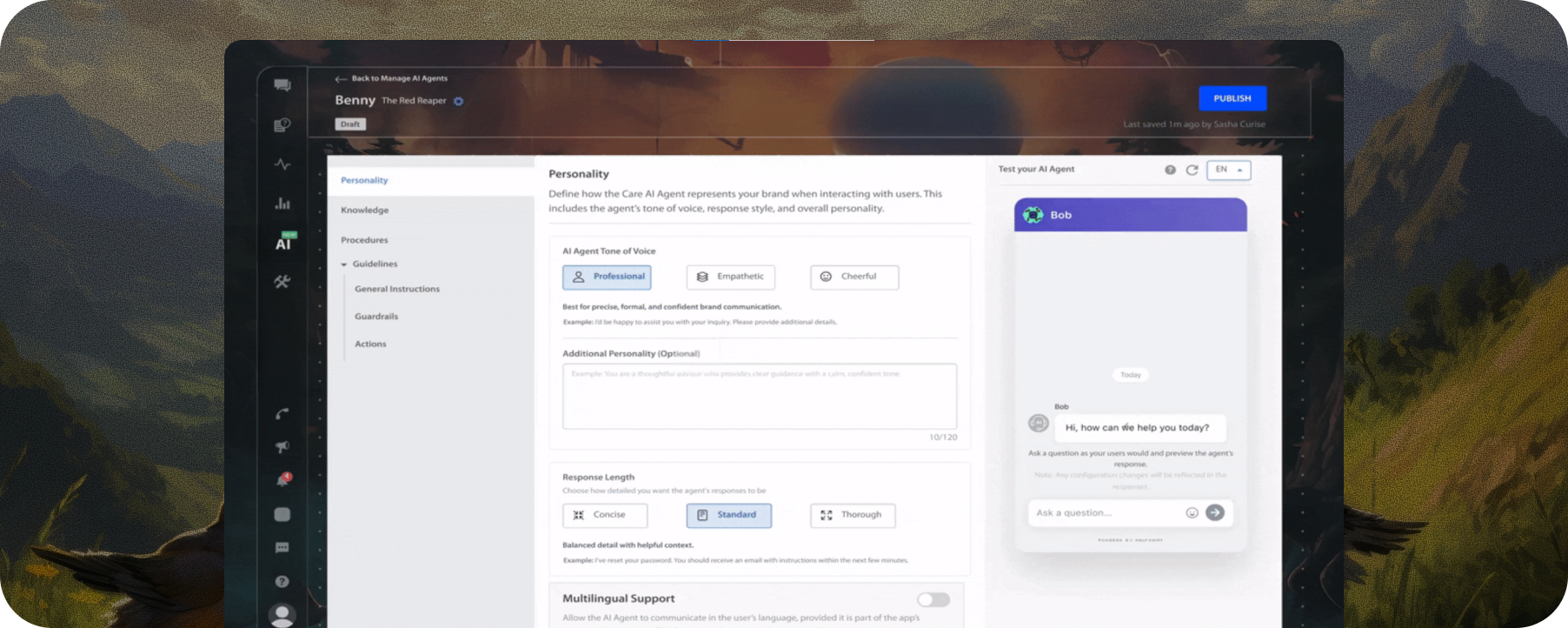
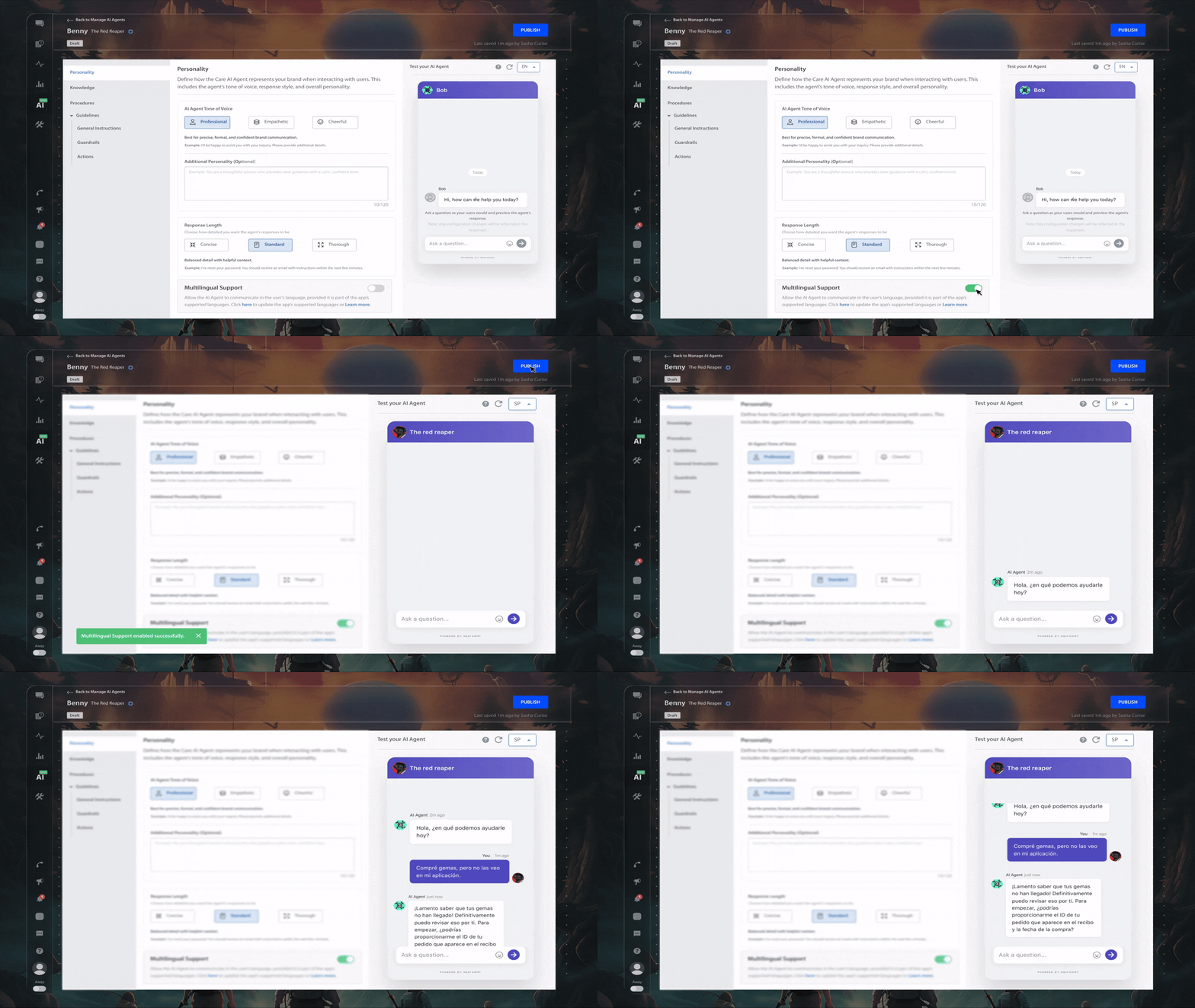
Care AI Agents can now automatically detect and respond in a player’s preferred language, helping brands deliver seamless, localized support experiences to players around the world.
With support for custom glossaries, fallback escalation for unsupported languages, and simple testing through the Chat Simulator, teams can confidently scale AI-powered support across regions while maintaining consistency, accuracy, and control.
By removing language barriers, organizations can improve player comprehension, engagement, and resolution rates, increase the volume of issues resolved autonomously, and deliver a more personalized support experience at a global scale.
Please refer to our help article for more information.
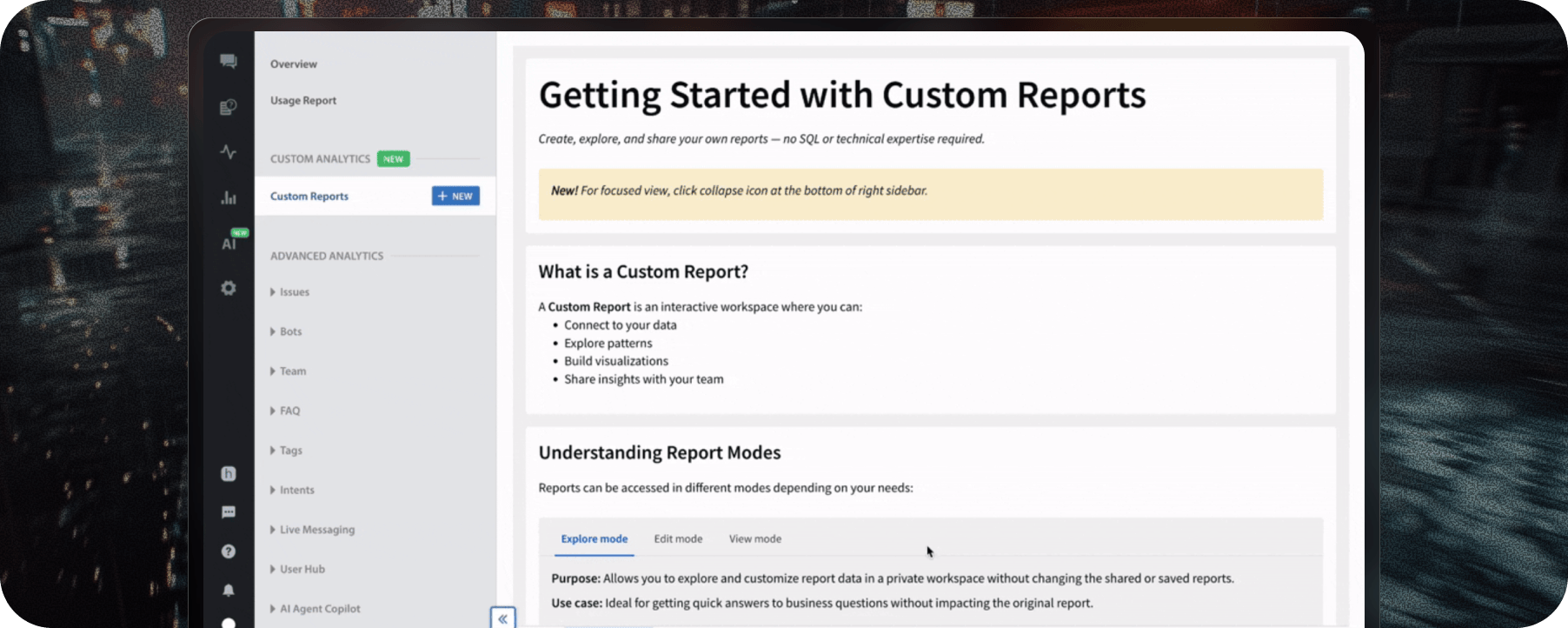
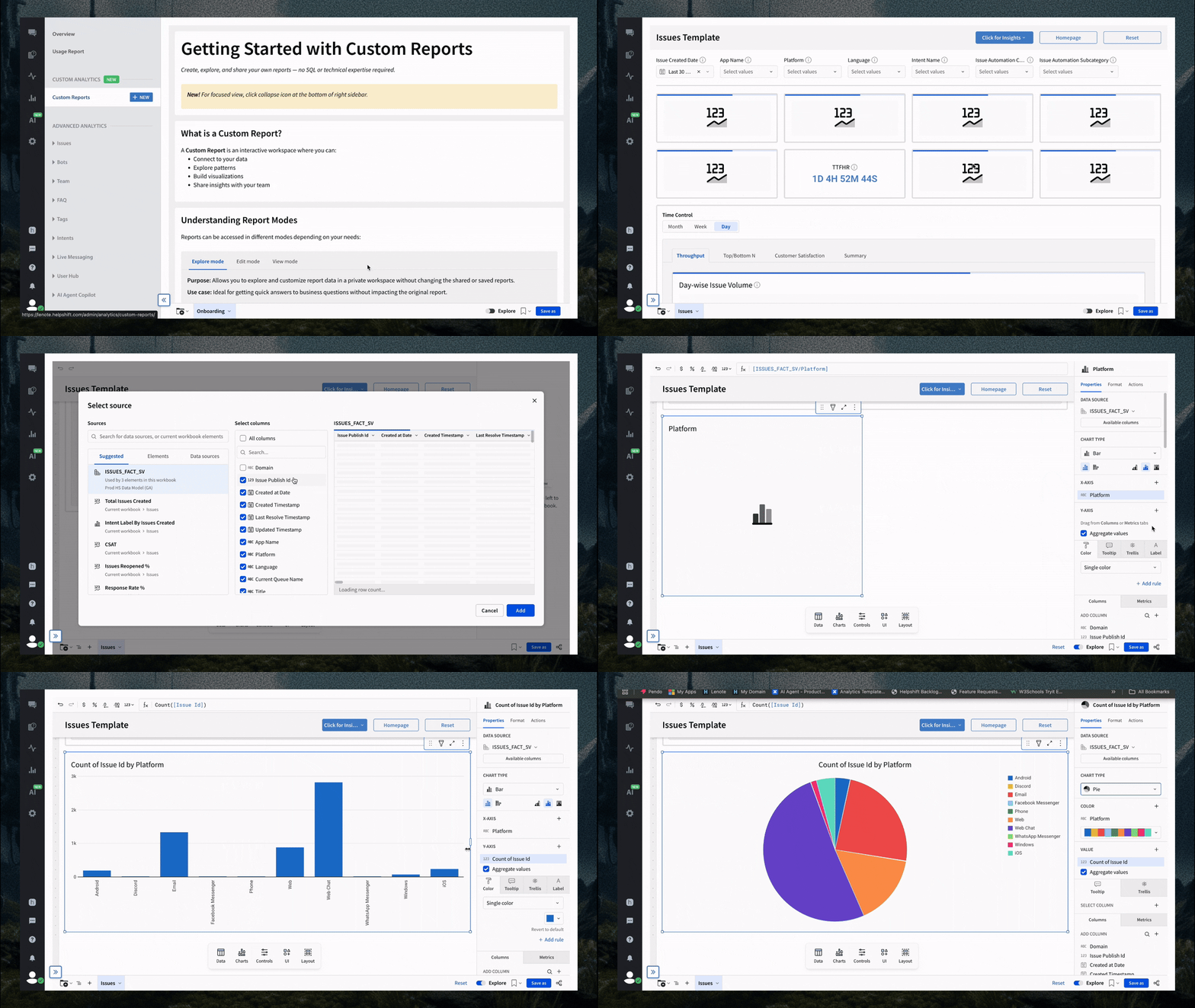
Helpshift’s Custom Analytics provides a flexible and highly customizable way to explore support data, enabling teams to build tailored reports and dashboards directly within the platform. With secure, complete data access and full control over reporting, teams can shape insights to their specific needs, make faster decisions, and drive a more data-driven approach to support.
It also includes pre-set templates—ready-to-use, best-practice dashboards that can be used as-is, duplicated, or customized—making it easier to get started and adapt reports quickly.
SDK X 10.5 for Unreal is now available. Regular SDK updates are essential to maintain optimal application performance and ensure compatibility with upcoming features and releases.
For a detailed list of all the improvements, please refer to the Release Notes.
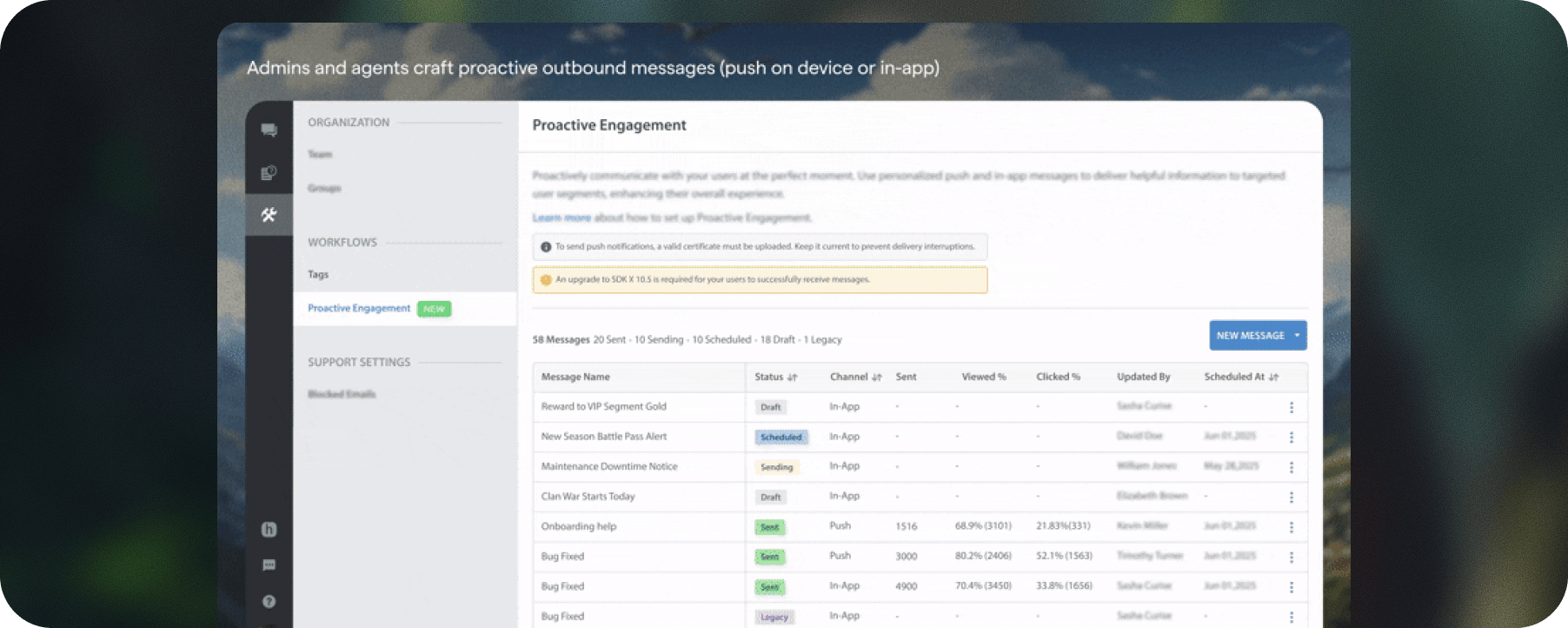
The shift from reactive support to proactive player success is here. The Proactive Engagement Open Beta is now live from April 6 to May 31st.
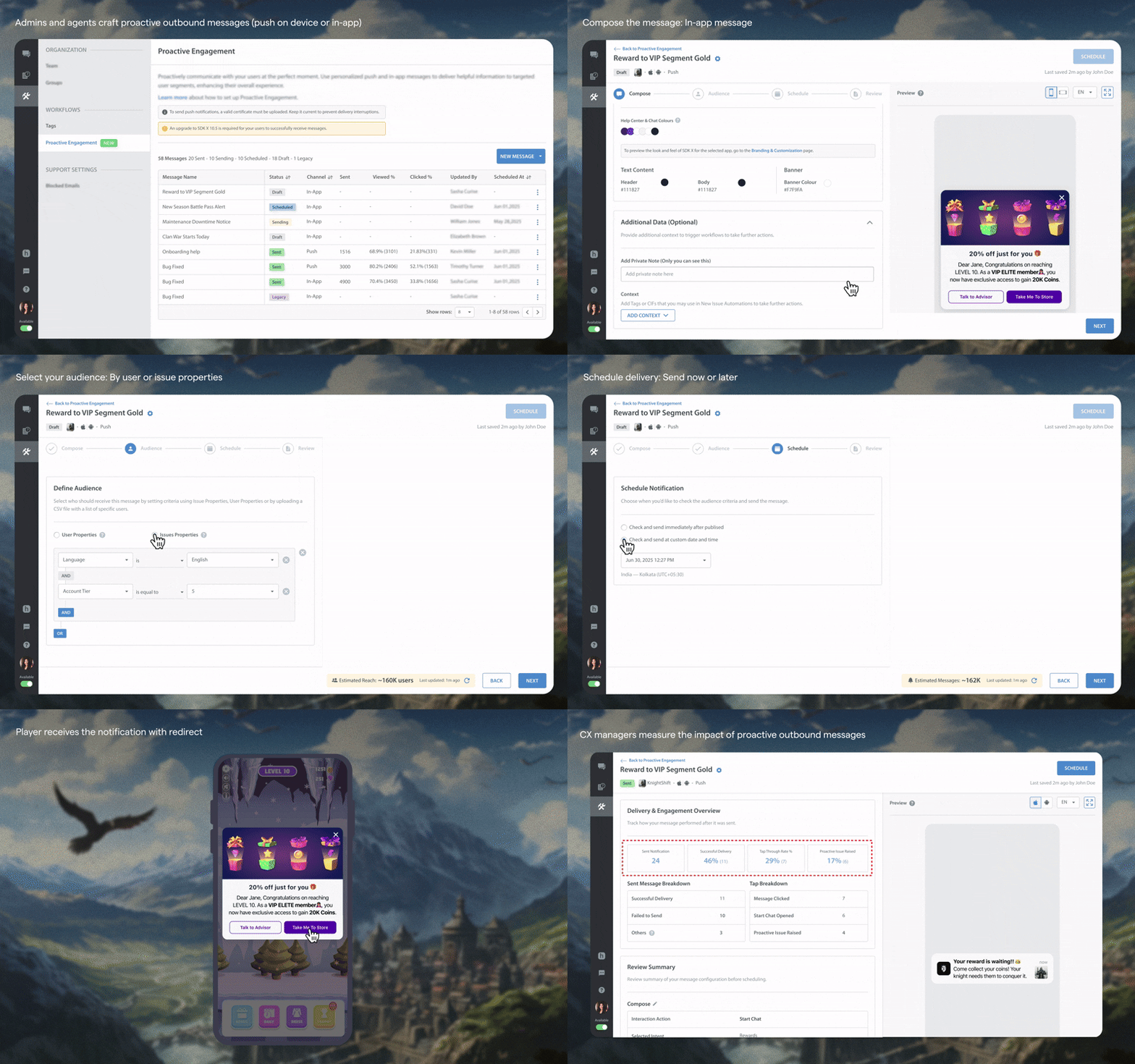
Proactive Engagement enables you to reach the right players at the right moment with targeted in-app and push messages. Instead of waiting for tickets, your team can reduce churn, resolve issues early, and drive meaningful engagement through timely, context-aware outreach.
The Power of Real-Time Context
While you can launch campaigns using existing support data, the true potential of Proactive Engagement is unlocked with User Hub. By passing metadata at session start—not just during support interactions—you gain a real-time, 360° view of your entire player base, allowing you to engage beyond just users who raise tickets.
Key Use Cases to Transform Your Strategy:
Automated VIP Onboarding: Instantly enroll players into managed VIP programs as they hit spend thresholds
Incident Mitigation: Proactively notify affected users during in-game bug issues to reduce ticket spikes
Churn Prevention: Re-engage “Whales” or top spenders who haven’t logged in or have stopped spending for 7+ days.
Closing the Loop: Automatically follow up with players after a complex ticket is closed to ensure satisfaction.
Beta Offer: Get started today with a complimentary pool of 500,000 messages to use during the 8-week beta period. Post-beta usage will transition to a consumption-based model at $0.01 per message sent.
To get started, view how to set up a campaign and send your first notification here.
If you haven’t yet upgraded to SDK X 10.5, follow the upgrade path here.
Configured with User Hub integrated, you will be able to reach out to all of your users. Learn more about User Hub Profile Fields here.
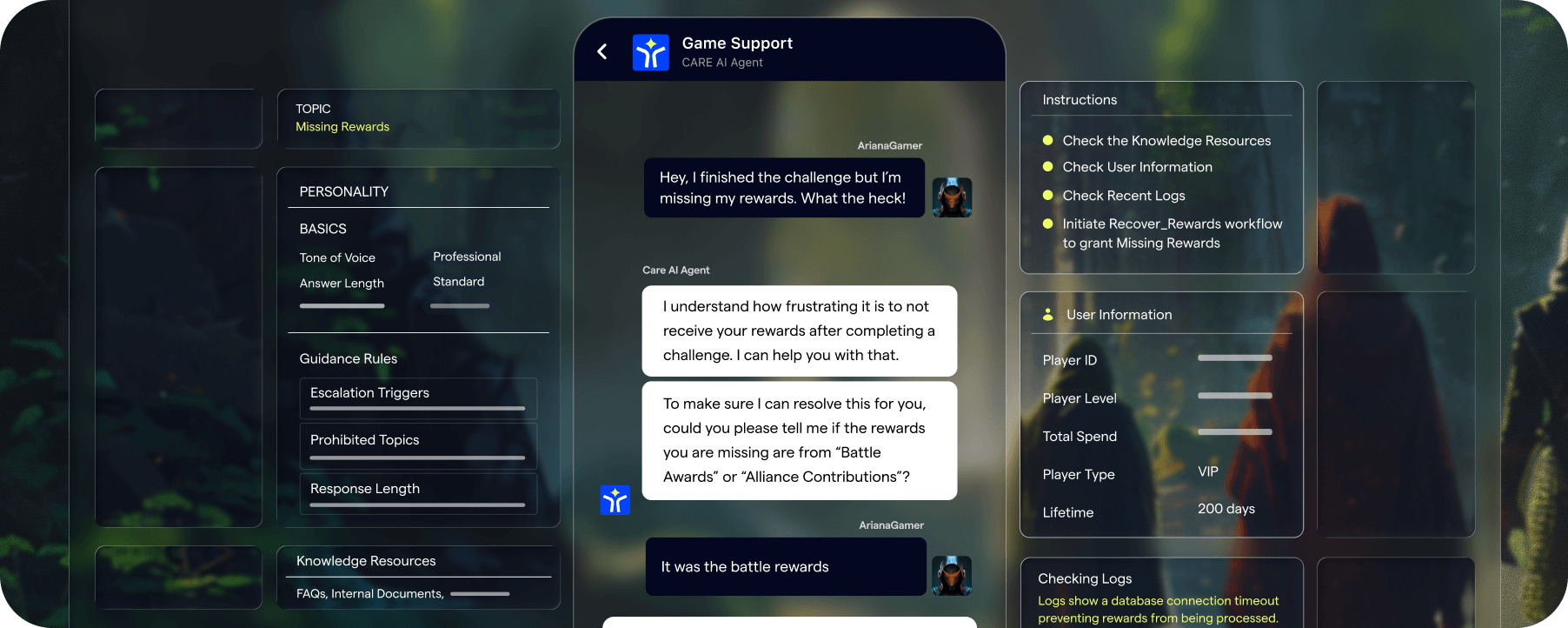
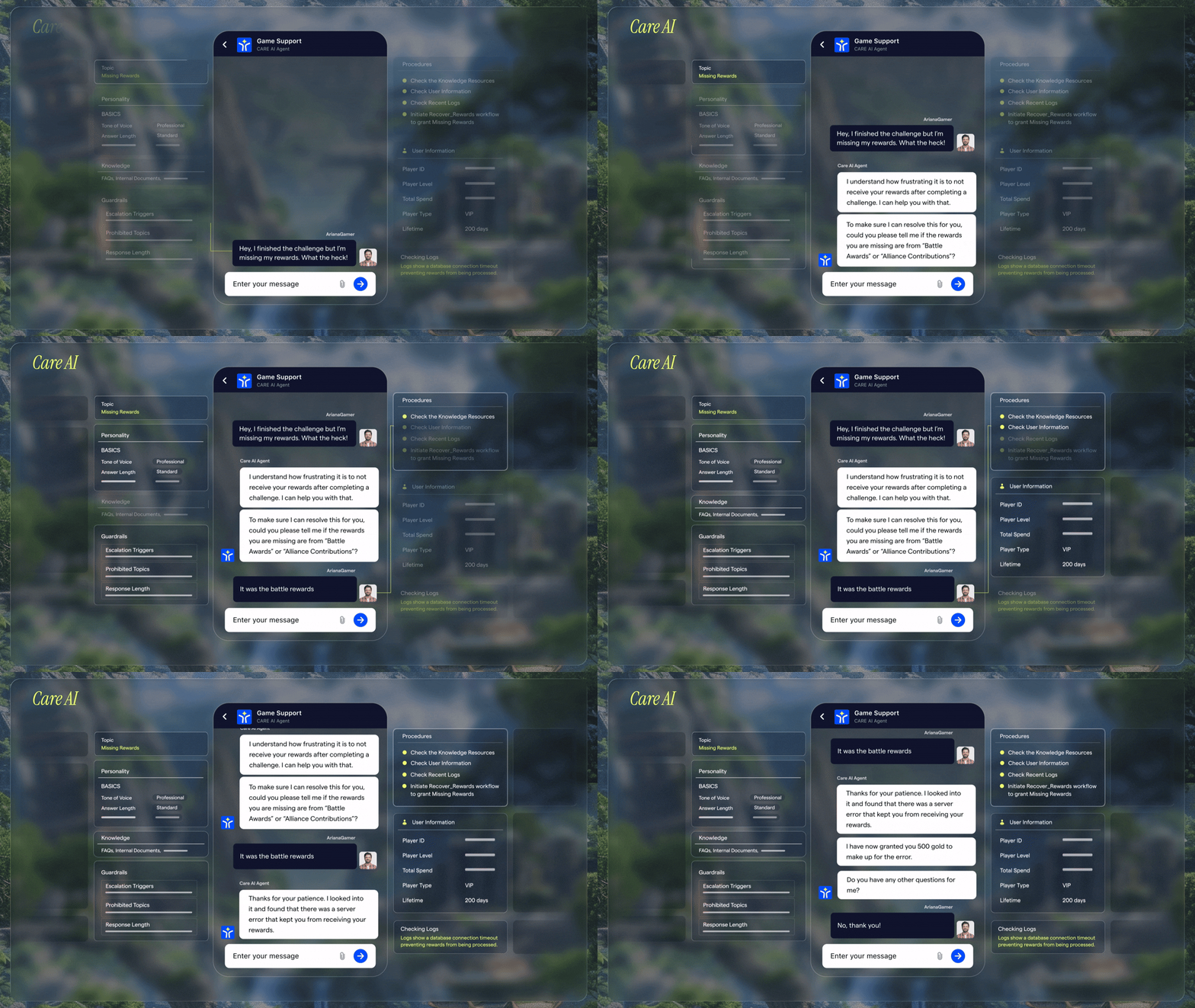
Care AI Agent is now generally available, the first gaming-native AI agent designed to resolve user issues instantly without breaking immersion. It acts as an intelligent, autonomous extension of your support team, delivering instant, on-brand resolutions. Grounded in your organization’s pre-approved knowledge, Care AI ensures every interaction is accurate, policy-compliant, and deeply context-aware.
The Outcome: Autonomous, Safe, and On-Brand Resolution
Key Components
Personality: Care AI speaks in your studio’s voice — aligned to your game’s tone, audience, and communication style.
Knowledge: Care AI only answers from sources you authorize, ensuring accuracy, compliance, and consistency.
Procedures: Agent Operating Procedures define step-by-step, studio-approved workflows that enable consistent, scalable resolution of complex support scenarios with minimal human intervention.
Actions: Care AI does not just respond — it can take actions inside your operational environment.
Guardrails: Enforce safety rules that keep Care AI within approved boundaries, preventing hallucinations, data leaks, and off-topic behavior.
Care AI Agent Analytics: Showcase the tangible value of AI Agents through detailed usage and performance tracking.
Deploy Care AI Agent to manage high inquiry volumes and deliver consistent, brand-approved resolutions in-app.